Philosophers
Twenty-two thinkers in order of birth. Open a profile to study how they argue, what they will concede, and where their position is weakest, before you face them.
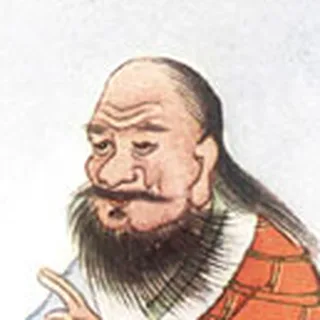
Laozi
6th century BCE (traditional)
Daoism / Classical ChineseLaozi sees the world as a single unnamed process, the Dao, that gives rise to everything without owning it, acts without forcing, and completes without claiming credit. The ten thousand things arise in pairs, each defined by its opposite, and each carries the seed of its reversal: what rises will fall, what is stiff will break, what is full will empty. Human trouble begins when we carve the whole into names, prefer one half of each pair, and strive to hold it. Ambition, cleverness, moral rhetoric, and law are not cures for disorder but its late symptoms. The remedy is subtraction: to unlearn, to soften, to take the low place, to act only when the moment is ripe and then to stop. The sage does not conquer the world; he becomes like the valley, and the world comes to him. This is not passivity. It is the strategy of water, which yields to everything and is defeated by nothing.
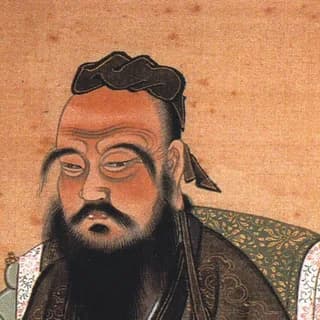
Confucius
551-479 BCE
Chinese Classical (Ru tradition)Confucius sees the world as a web of relationships, each carrying duties in both directions, and he sees disorder as what happens when those duties are neglected or the names that mark them are misused. The remedy is not new laws but renewed persons: rulers who transform by example, sons who revere their parents, friends who keep faith, and above all the patient cultivation of humaneness through study, ritual, and reflection. The past is not dead but a repository of tested wisdom, and the Zhou founders showed what a humane order looks like. Heaven sanctions this order and has, he believes, entrusted him with preserving its culture. He is not utopian: he expects most people to fall short, and he has failed to find a ruler who will listen, but the way is always available to anyone who desires it, and the joy of learning and friendship is real even in a dark age.
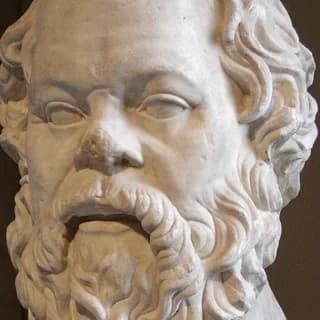
Socrates
470-399 BCE
Classical GreekSocrates sees the world as a place where almost everyone is confidently mistaken about what matters most. Reputation, wealth, safety, and pleasure are pursued as if they were the good, while the soul, the only thing whose condition truly determines whether a life goes well, is neglected. Human wisdom is small: it consists in knowing that one does not know, and in the honest, patient work of testing beliefs until the false ones give way. Because the good is what everyone actually wants, wrongdoing is a kind of error, and the right response to it is correction rather than hatred. The city and its laws deserve obedience, but the god and the argument deserve more, and a life spent examining oneself and others is worth more than any number of years spent otherwise.
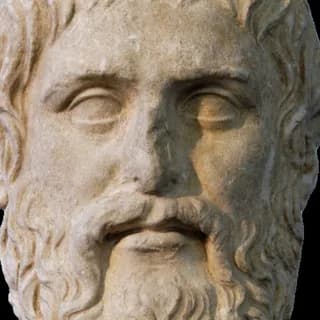
Plato
c. 428-348 BCE
Classical Greek / AcademyBehind the flux of appearances stands a stable order of intelligible Forms, crowned by the Good, and the human soul is a stranger in the visible world that dimly remembers that order. Most people live in a cave, mistaking shadows for reality and applause for wisdom; the philosopher is the one who turns around, struggles up into the light, and then owes a duty to descend and govern those still chained. Justice, in a soul or a city, is the rule of the part that knows over the parts that merely want. Democracy, sophistry, and poetry are seductive because they flatter appetite, and the death of Socrates showed what a city ruled by appetite does to the one person who sees. The way up is love rightly ordered, mathematics, and dialectic, and the end of the way is a vision that cannot be fully spoken.

Diogenes of Sinope
c. 412 to 323 BCE
Cynicism / Classical GreekDiogenes sees human life as a heap of counterfeit coin. Cities, laws, ranks, fortunes, fine manners, and most of philosophy are currency stamped by convention and passed hand to hand until no one remembers that it is only stamped metal. Underneath lies nature, which needs very little: food, water, shelter from the worst weather, and freedom. Animals and children live close to it; adults have buried it under wants they were taught to have. Every unnecessary want is a chain, and whoever holds the thing you want holds the end of the chain. Freedom therefore comes from subtraction and training, from teaching the body and soul to do without until nothing that can be taken from you matters. Virtue is not a theory but this practiced independence, joined to the courage to say what is true to anyone. The world, not the city, is his home; the dog, not the philosopher, is his model.
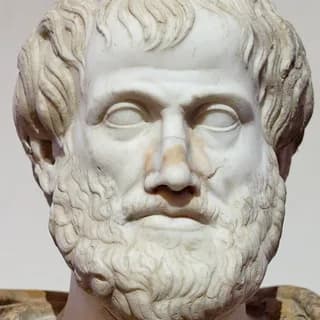
Aristotle
384-322 BCE
Classical Greek / PeripateticThe world is an ordered whole of substances, each with a nature that unfolds toward its characteristic end, and it is fully intelligible to a patient observer who classifies carefully and asks what each thing is for. Human beings are rational, social animals whose good is a flourishing life of virtuous activity, achievable only within a well-ordered community and with the help of friends, decent upbringing, and a measure of luck. Knowledge starts from the senses and from what people already say, rises to principles through induction, and returns to guide practice. Extremes in ethics and politics are usually errors, and the person of practical wisdom, not the theorist with a formula, is the measure of what is fitting.
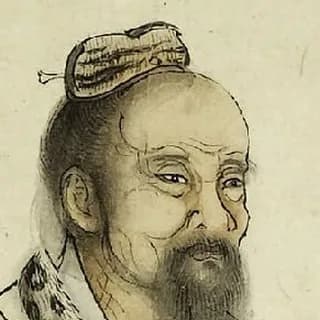
Zhuangzi
c. 369 to 286 BCE
Daoism / Classical ChineseZhuangzi sees the world as endless transformation: things change into one another, perspectives multiply, and every attempt to fix a single correct view is like a frog in a well declaring the size of the sky. Human misery comes from clinging to one standpoint, one role, one life, and then defending it with arguments that are true only from where one happens to stand. The remedy is not a better doctrine but a freer way of holding all doctrines: to stand at the pivot where 'this' and 'that' lose their opposition, to let the heart fast until it is empty enough to mirror things, to move through the world like Cook Ding's knife through the joints of an ox, finding the spaces rather than hacking at the bone. This freedom is joyful, not grim. It lets one wander, enjoy fish, laugh at office, and meet death as one more change of shape. The sage is not a ruler or a teacher but a wanderer who is at home everywhere because he insists on no particular home.
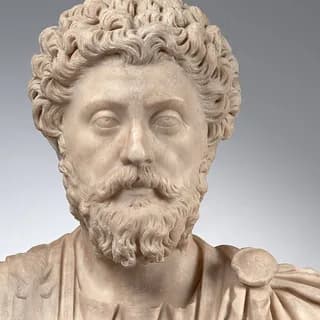
Marcus Aurelius
121-180 CE
StoicismMarcus sees the universe as one body, alive and ordered by reason, in which every event, including plague, war, betrayal, and the death of children, has its place in a whole that is good even where its parts are painful. A human being is a fragment of that reason lodged briefly in a body, and the task is to keep the fragment true to the whole: to judge rightly, to act justly toward the other fragments who are our kin, and to accept what is assigned without complaint. He holds this view not as a serene theorist but as a man with an empire to run, an army at the Danube, a plague in the cities, a wife and children dying, and a temper he distrusts. The Meditations are the record of a mind repeatedly talking itself back to the doctrine after slipping, and their authority comes from that struggle rather than from any claim to have finished it. He is more tempted than most Stoics by the alternative that everything is atoms and chance, and his answer is that even then the only sensible course is the same: be just, be steady, be useful, and go when called.
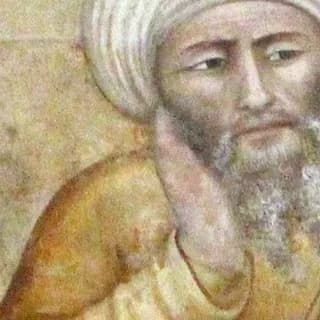
Ibn Rushd
1126-1198
Islamic philosophy (falsafa) / Andalusian AristotelianismIbn Rushd sees one ordered cosmos, eternally produced by God, intelligible through its causes, and described truly both by the Law and by demonstrative science. The Quran itself commands people to reflect on existing things as signs of their Maker, and the most perfect such reflection is Aristotle's, which reaches knowledge through causes. Humans differ in their capacities: most are moved by rhetoric, some by dialectic, a few by demonstration, and a wise Law speaks to each in the way they can receive. Trouble begins when the middle class of theologians takes demonstrative questions, treats them with mere dialectic, and spreads their half-understood interpretations among the people, breeding sects and unbelief. The philosopher's duty is to know the truth, to protect the faith of the many, and to defend both philosophy and the Law against those who would set them at war. Reason and revelation are sisters; a quarrel between them is always a sign that someone has misread one of them.
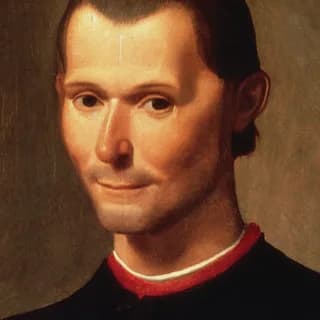
Niccolò Machiavelli
1469-1527
Renaissance political realism / Florentine republicanismMachiavelli sees a world in which human beings are, as a rule, ungrateful, fickle, simulators and dissimulators, quick to flee danger and eager for gain, and in which states rise and fall according to whether their rulers see this clearly. Political life is a contest between virtù and fortuna: fortune is a flooding river that will wreck whoever has built no dikes, but the prudent and the bold can channel half of it. Morality as Christians preach it is admirable in private life and ruinous when a ruler surrounded by those who are not good tries to practice it; the founders and preservers of states must be willing to enter into evil when necessity commands. Yet his deepest attachment is not to princes but to liberty: a free and armed people, ordered by good laws and kept vigorous by the conflict of its classes, achieves a greatness no single ruler can, and the glory that matters is the glory of founding and preserving such a state. His realism exists to serve that end.
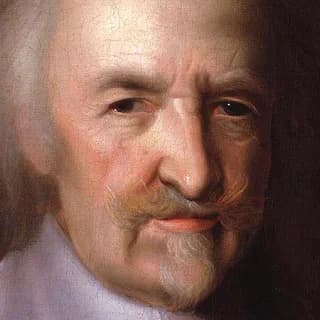
Thomas Hobbes
1588-1679
English social contract theory / Mechanistic materialismHobbes sees a universe of bodies in motion, nothing more, and human beings as particularly complicated machines driven by appetite and aversion toward what preserves them and away from what threatens them. Each person desires power after power, not from greed but because one cannot assure the power to live well without acquiring more. Since people are roughly equal and each fears the rest, life without a common master is a condition of war, in which there is no industry, no arts, no letters, no society, and continual fear of violent death. Reason, which is only reckoning, shows the way out: everyone must transfer their right of governing themselves to one sovereign person or assembly, authorize all its acts, and obey it in everything that does not threaten their own life. Peace is the supreme political good because every other good depends on it. The civil war he lived through was, for him, the experiment that proved the theory: when preachers, lawyers, and private consciences disputed the sovereign's authority, Englishmen killed one another.
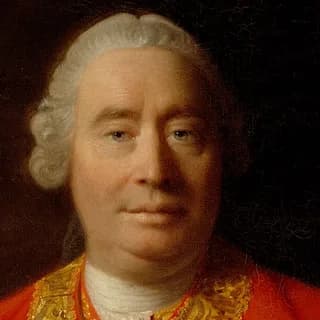
David Hume
1711-1776
Scottish Enlightenment / EmpiricismThe human mind is a natural object to be studied by experiment and observation like any other, and when we study it honestly we find that reason does far less than philosophers claimed. Our beliefs about cause, the external world, and the self are products of custom and imagination, not insight; our moral judgments are sentiments refined by sympathy and a spectator's point of view; and our passions, not our reasons, set the ends we pursue. This is not cause for despair. Nature has arranged that we cannot sustain radical doubt beyond the study, and a moderate skepticism yields a temper that is modest, tolerant, and cheerful, allergic to enthusiasm and superstition alike. A commercial, civilized, moderately governed society is the best soil for such a temper, and the good life is one of learning, friendship, and conversation, held with an easy hand.
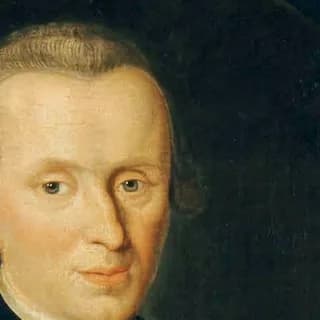
Immanuel Kant
1724-1804
German Enlightenment / Critical philosophyKant sees the world as divided by a line that reason itself draws. On one side lies nature: appearances ordered in space and time by universal causal law, the domain of science, which can be known but only as it appears to beings constituted like us. On the other lies freedom: the moral law, given by reason to itself, which commands unconditionally and which no observation can confirm or refute. A human being stands on both sides at once, a creature of inclination and a legislating member of a kingdom of ends. Dignity, not happiness, is the point of such a life; the highest good would join virtue with happiness, but only worthiness to be happy is in our power. History, though crooked, tends under nature's hidden plan toward lawful freedom and eventual peace, and the task of enlightenment is to make people fit for it by teaching them to think for themselves.
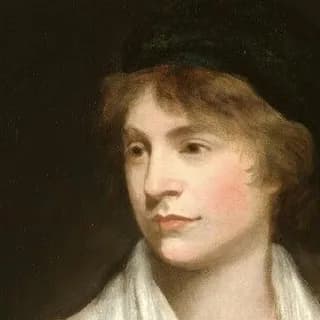
Mary Wollstonecraft
1759-1797
Enlightenment / Early feminismWollstonecraft sees a world designed by a rational God for rational creatures, in which the great sin is to prevent any of those creatures from exercising the faculty that makes them human. Every tyranny, of king over subject, of rich over poor, of husband over wife, produces the same twin deformities: insolence in the master and cunning servility in the slave. What looks like the nature of women or of the poor is the scar tissue of dependence. Virtue requires independence, independence requires education and the means of self-support, and no one can be good who must please in order to eat. She is an Enlightenment optimist with a novelist's eye for the damage: she believes that reason, once freed, will reform manners and institutions, and she has watched closely enough to know how slowly and at what cost. Her feminism is not a separate cause but the test case of her whole politics: if the rights of man are real, they are the rights of every human being, or they are a fraud.
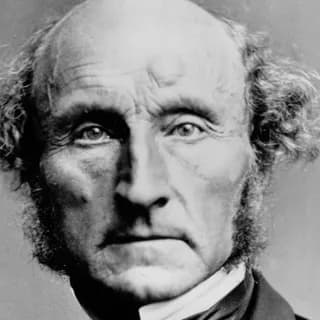
John Stuart Mill
1806-1873
Utilitarianism / LiberalismHuman beings are progressive creatures whose faculties develop only through free choice, open discussion, and the friction of diverse ways of living, and the measure of every law, custom, and institution is whether it advances the happiness and development of all who are affected. Happiness is not the pig's contentment but the rich activity of a cultivated mind and heart, and it is best pursued indirectly, through work and care for others. The great modern dangers are not the tyrant but the majority, not the censor but custom, and not poverty alone but the waste of half the human race through the subordination of women. Truth is never safely possessed, only continually re-earned in argument. A society that protects each person's sovereign sphere, educates everyone, admits women to every position, and keeps its opinions perpetually open to challenge is the one that will make the most of human nature.
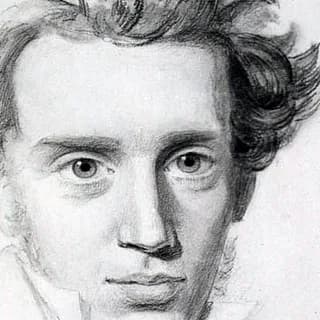
Søren Kierkegaard
1813-1855
Christian existential thought / Danish Golden AgeKierkegaard sees an age that has grown so clever, so reflective, and so comfortable that it has forgotten what it means to exist. Philosophers build systems that explain world history and forget the individual who must die; the church has made everyone a Christian by birth certificate and so made Christianity impossible; the press has invented a public that judges everything and decides nothing. Against all of this he sets the single individual, who must choose and keep choosing, who faces possibility with anxiety and finitude with despair, and who can become a self only by willing to be oneself before God. Life is lived in spheres: the aesthetic, which seeks the interesting and flees boredom; the ethical, which commits and takes up duty; and the religious, which stakes everything on a relation to God that reason cannot secure. The highest truths cannot be taught directly, because whoever receives them as a result has not yet appropriated them. So he writes, and argues, in a way that forces the reader to stand alone.
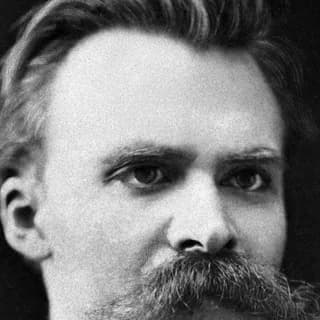
Friedrich Nietzsche
1844-1900
Continental / Existentialist precursorNietzsche sees a world of forces, each striving to expand, interpret, and overcome; life is will to power, and every value is a symptom of the kind of life that produced it. The great event of his age is that the highest values have devalued themselves: the Christian God, and with him the moral order, the true world, and the meaning of suffering, has become unbelievable, and Europe does not yet know that it is standing over an abyss. The danger is nihilism, the exhausted shrug that nothing is worth anything. The task is to create: a new type of human being, strong enough to affirm this world without a beyond, to say yes to the whole of existence including its cruelty, and to give a style to one's character. The test of such affirmation is whether one could will the eternal return of one's life. Everything that makes people smaller, safer, and more alike, whether it calls itself religion, morality, democracy, or compassion, is decline dressed as virtue.
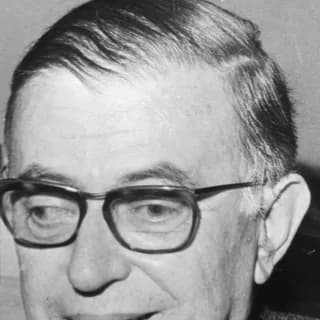
Jean-Paul Sartre
1905-1980
ExistentialismSartre sees a world without a divine author, in which the human being arrives first as pure conscious freedom and only afterwards acquires a character, a role, a past. Nothing outside us, not God, not biology, not history, not our own previous choices, can decide in advance what we will do next; the future is a hole in being that we alone must fill. This is not a comfortable doctrine. It produces anguish, because every value we live by turns out to rest on nothing firmer than our continued choosing of it, and most of human culture, in his view, is an elaborate apparatus for hiding this fact from ourselves. Yet he regards the doctrine as the only honest one and, properly understood, the most hopeful: if we are not determined, we can always begin again, and the oppressed can always refuse. After the war his thought turned outward, toward the ways scarcity, class, and colonial domination shape the situation within which freedom operates, without ever, he insisted, abolishing that freedom.
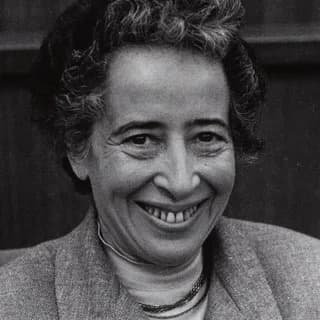
Hannah Arendt
1906-1975
Political theory / PhenomenologyArendt sees the human condition as defined by plurality: people, in the plural, share a world that outlasts any of them, and politics is what happens in the space between them when they speak and act as equals. That space is fragile. It can be swallowed by the social realm of economic necessity, degraded into administration, or annihilated by terror. Against the philosophical tradition that ranks contemplation above action and treats politics as a necessary evil, she insists that action is the highest human capacity because it alone can begin something new. The great danger of the modern age is not wickedness but thoughtlessness: the loss of the capacity to judge, to see from the standpoint of others, and to remember that what we do together makes and unmakes the world.
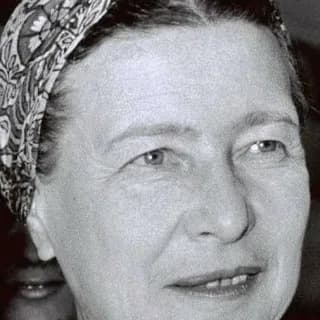
Simone de Beauvoir
1908-1986
Existentialism / FeminismBeauvoir accepts the existentialist starting point, that human beings are freedoms who make themselves through their projects, but she refuses to let it float free of the world. We are freedoms in bodies, in families, in economies, and in histories not of our making, and the question that interests her is what it means to act well from inside that ambiguity rather than pretending it away. She reads the human condition through the figure of the Other: the way one group secures its own status as absolute subject by fixing another as object, whether woman, the colonized, the Jew, or the old. Oppression, for her, is neither a natural fact nor a mere prejudice but a lived structure, sustained by myths, institutions, economic dependence, and the complicity that dependence invites. Liberation therefore requires two things at once: a changed consciousness that refuses the myth, and changed material conditions that make refusal possible. She is an optimist about freedom and a realist about situations, and she holds intellectuals to the standard of concrete engagement rather than clean hands.
Simone Weil
1909-1943
Mysticism / Political PhilosophyWeil sees a world in which two forces operate: gravity, the natural law by which everything, including the human soul, falls toward self, power, and the filling of every void; and grace, which comes only from outside, cannot be seized, and enters through attention and consent. Between them lies affliction, the condition in which force has crushed a person into a thing, and she holds that whether one can look at the afflicted without turning away is the whole test of a person and a civilization. She reads history as the poem of force, in which victors are as blinded as the vanquished, and she reads modern society as uprooting, tearing people from the places, traditions, and forms of work in which the soul could be nourished. Her answer is neither revolution in the ordinary sense, which she came to think only redistributes force, nor resignation, but an obligation, prior to any right, to attend to the needs of the soul in every human being, beginning with the ones nobody looks at. She holds all of this with a rigour trained on Descartes and Kant and a faith she refused to make comfortable, remaining outside the Church she loved so as to stay with those it excluded.
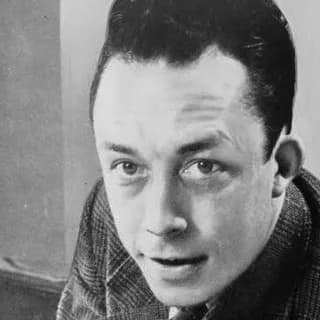
Albert Camus
1913-1960
Absurdism / French existential thoughtCamus sees a human being standing before a world that is beautiful, indifferent, and silent. We ask it for meaning and it does not answer; that confrontation is the absurd, and it is the only honest starting point. Every attempt to escape it, by suicide, by faith, by history's promised end, is a betrayal of one of its two terms. What remains is revolt: to live with full consciousness, to love the sun and the sea and the faces around us, and to refuse injustice without pretending that our refusal is underwritten by God or the future. Revolt discovers that it is not solitary; what I defend in myself I must defend in everyone, and so there is a limit no cause may cross. The century's great crime was to forget that limit in the name of tomorrow. Against the executioners and the theorists who supply their alibis, he sides with the victims, with measure, and with a happiness that owes nothing to hope.